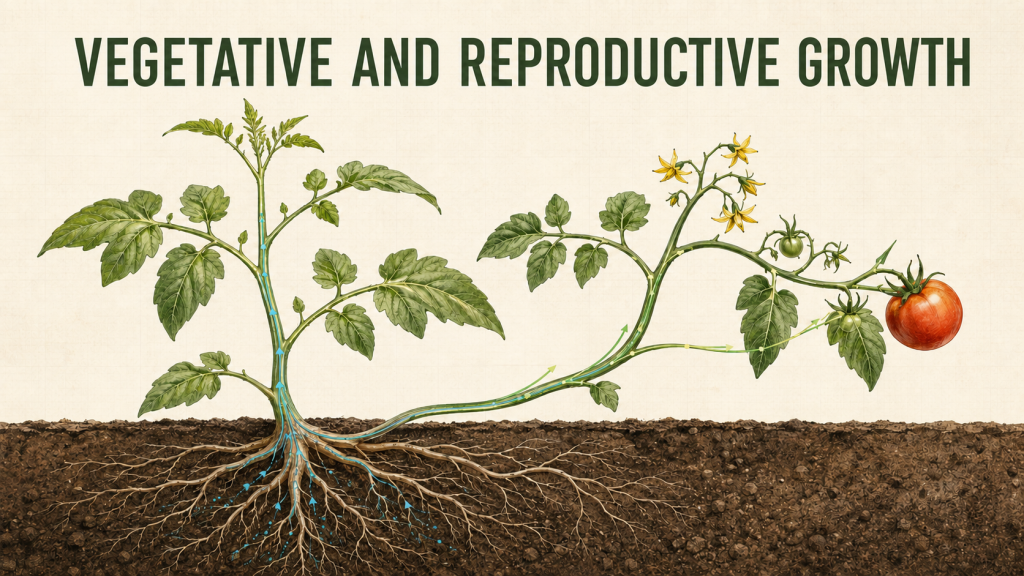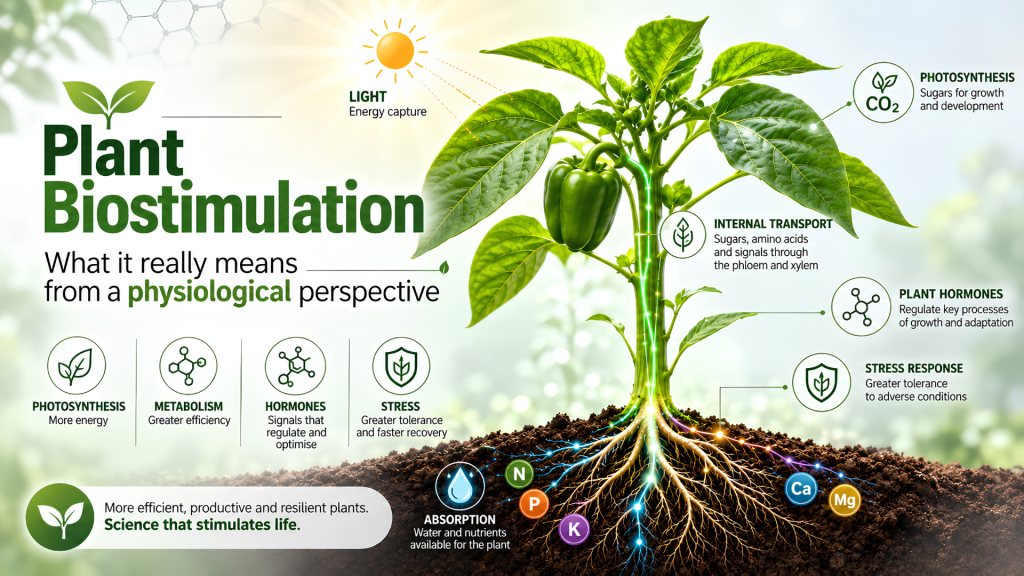



During the summer, plants may be exposed to temperatures above the range required for normal growth and development. When temperatures exceed the crop’s optimum range for a sustained period, a condition known as heat stress occurs. This can disrupt essential processes such as photosynthesis, respiration, water and nutrient uptake, flowering and fruit development, potentially resulting in losses in both yield and crop quality.
However, damage does not depend solely on the maximum temperature reached. Other important factors include the duration of the heat episode, night-time temperatures, relative humidity, solar radiation, water availability, the crop’s growth stage and the adaptive capacity of each species or variety. Consequently, two plants exposed to the same air temperature may respond very differently.
When Does Heat Stress Begin?
Every crop has an optimum temperature range within which its metabolism operates efficiently. When plant tissue temperatures exceed this range, biochemical reactions begin to lose their balance. If the heat episode is moderate and short-lived, the plant may activate defence mechanisms and subsequently recover. However, if the heat is intense, prolonged or coincides with a particularly sensitive growth stage, the damage may become irreversible.
It is also important to remember that plant temperature does not always match air temperature. Under intense solar radiation and limited water availability, leaves and fruits may become considerably warmer than the surrounding air. By contrast, a well-hydrated plant can partially cool itself through transpiration.
The First Response: Closing the Stomata to Reduce Water Loss
High temperatures generally increase the evaporative demand of the atmosphere. This means that the surrounding air can extract water from the leaves more rapidly, forcing the plant to regulate water loss. One of its first responses is the partial closure of the stomata, the small pores located mainly on the leaf surface.
Closing the stomata helps the plant conserve water, but this response comes at a cost. When stomatal opening is reduced, less carbon dioxide enters the leaf. As a result, photosynthesis slows down and the plant produces fewer sugars to support growth, the formation of new tissues and crop development.
This creates a complex physiological balance. Keeping the stomata open promotes CO₂ uptake and cooling through transpiration, but it also increases water consumption. Closing them limits dehydration, but reduces photosynthetic capacity and may cause leaf temperature to rise. The plant’s final response will depend on the interaction between heat, atmospheric humidity and the amount of water available in the soil.
Reduced Photosynthesis and Increased Respiration
Photosynthesis is one of the processes most sensitive to high temperatures. Excessive heat can affect the enzymes involved in carbon fixation, disrupt chloroplast membranes and reduce the efficiency of photosystem II, an essential component in the conversion of light energy into chemical energy.
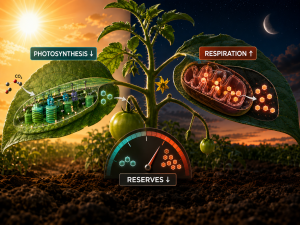
At the same time, respiration usually increases as temperatures rise. The plant consumes more of the sugars it has produced in order to maintain essential functions and repair damaged structures. If night-time temperatures also remain high, this increased consumption can continue for hours when no photosynthesis is taking place to compensate for it.
The result is a less favourable carbon balance: the plant produces fewer resources during the day while consuming more of them to survive and maintain its tissues. This explains why heat episodes can slow growth, reduce fruit size and limit the accumulation of reserves, even when no visible scorching or external damage is present.
Cellular Damage and the Formation of Reactive Oxygen Species
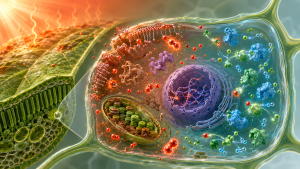
Heat stress changes the fluidity and stability of cell membranes. It can also cause certain proteins to lose their structure and cease functioning correctly. These alterations promote the formation of reactive oxygen species, commonly known as ROS.
ROS are naturally produced during plant metabolism and, at low concentrations, play an important role in cellular signalling. Problems arise when they are generated faster than the plant can neutralise them. This causes oxidative stress, which can damage lipids, proteins, pigments, cell membranes and genetic material.
To reduce this damage, the plant activates its antioxidant systems. These include enzymes such as superoxide dismutase, catalase and several peroxidases, as well as antioxidant compounds such as ascorbate, glutathione, carotenoids and certain phenolic compounds.
The speed and efficiency of this antioxidant response greatly influence the plant’s ability to tolerate the heat episode and recover once temperatures return to normal.
Heat-Shock Proteins: An Internal Protection System
Another essential defence mechanism is the production of heat-shock proteins, or HSPs. These proteins act as molecular chaperones: they help stabilise other proteins, prevent them from folding or aggregating incorrectly, and support their repair or removal when they have been damaged.
Previous exposure to moderately high temperatures can activate these protective systems and allow the plant to develop a degree of acclimatisation. As a result, it may respond more quickly and effectively to a subsequent heat episode.
Nevertheless, this protective capacity has limits. Heat-shock proteins cannot prevent damage when the intensity or duration of the stress exceeds the crop’s tolerance threshold.
Osmotic Adjustment and Metabolic Changes
To retain water within its cells and protect cellular structures, many plants accumulate substances known as osmoprotectants. These include proline, soluble sugars, betaines and other organic compounds that are compatible with normal cellular metabolism.
These substances contribute to osmotic adjustment, stabilise proteins and membranes, and help reduce oxidative damage. At the same time, the plant modifies the expression of numerous genes and redistributes its resources.
Under stressful conditions, growth is no longer the plant’s absolute priority. Instead, a significant proportion of its available energy is redirected towards defence, cellular maintenance and tissue repair. Although this response improves the chances of survival, it can also reduce growth and productive potential.
Flowering and Fruit Set: The Most Sensitive Stages
Heat can cause damage at any stage of the crop cycle, but reproductive development is particularly vulnerable. High temperatures can reduce pollen viability and germination, inhibit pollen tube growth, alter stigma receptivity and increase the abortion of flowers or young ovaries.
As a consequence, fruit set may decline even when the vegetative parts of the plant still appear relatively healthy.
In fruits that have already formed, heat and water stress can limit cell division and expansion, resulting in smaller fruits. High temperatures may also accelerate or disrupt ripening and affect colour, firmness, composition and shelf life. Intense solar radiation can additionally cause sunscald on exposed leaves and fruits.
The impact of heat stress is therefore strongly influenced by crop stage. A brief heatwave during flowering or fruit set may have a greater effect on final yield than a longer episode occurring during a less sensitive period.
What Symptoms Can Be Observed?
The effects vary according to the crop and the intensity of the stress, but common visible symptoms include:
- Leaf rolling or wilting.
- Loss of turgidity.
- Leaf yellowing.
- Necrosis along leaf margins.
- Scorching or sunburn damage.
- Flower drop.
- Poor fruit set.
- Smaller fruits.
- Temporary growth cessation.
Less visible effects may also occur before external symptoms become apparent. These include reduced root activity, nutritional imbalances, impaired water uptake and lower photosynthetic performance.
It is important not to interpret every temporary episode of wilting as irreversible damage. During the hottest part of the day, a plant may temporarily reduce its activity and lose some turgidity, before recovering when temperatures fall in the evening.
However, when night-time recovery is incomplete, wilting persists or symptoms become progressively worse, the plant is likely to be experiencing more severe stress.

Key Management Strategies to Reduce the Impact of Heat
The most effective strategy is prevention. Management practices should always be adapted to the crop, soil characteristics, production system and expected environmental conditions.
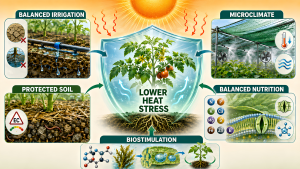
Maintaining an adequate water supply is essential, but both water deficit and excessive irrigation should be avoided. Waterlogged soils contain less oxygen, which can damage root activity and further restrict the uptake of water and nutrients.
Irrigation frequency should be adjusted to actual crop demand and soil water-holding capacity. During periods of high evaporative demand, more frequent irrigation with carefully controlled volumes may be more effective than applying large amounts of water at wider intervals.
Soil covers, mulches and plant residues can help conserve moisture and reduce fluctuations in soil temperature. Improving soil structure and organic matter content also promotes root development, water infiltration and water retention.
Electrical conductivity should be monitored because salinity makes it more difficult for roots to absorb water. Under saline conditions, water may be physically present in the soil but less available to the plant because of the increased osmotic pressure.
Depending on the production system, shading, ventilation, misting and appropriate canopy management can also be used to reduce tissue temperature and improve the crop microclimate.
Balanced nutrition contributes to membrane stability, stomatal regulation, enzyme activity and antioxidant defence. However, during a severe heat episode, root absorption may be reduced. Applications must therefore be carefully planned, avoiding excessive concentrations that could increase osmotic stress.
Biostimulants may form part of a preventive or recovery strategy when used appropriately. Certain amino acids, seaweed extracts and other bioactive compounds can support osmotic adjustment, antioxidant metabolism and physiological recovery.
Their purpose is not to replace irrigation, mineral nutrition or microclimate management, but to complement a well-designed agronomic strategy.
A Response Based on Survival, Protection and Recovery
Plants do not remain passive when exposed to heat stress. They regulate their stomata, temporarily restrict growth, activate antioxidant systems, synthesise protective proteins and reorganise their metabolism in order to conserve water and limit cellular damage.
These responses can help the plant overcome moderate heat episodes, but they also require energy and resources. As a result, even when the plant survives and eventually recovers, its productive potential may still be affected.
Understanding these mechanisms helps growers interpret what is happening within the crop during the summer. Anticipating periods of extreme heat, maintaining a healthy and functional root zone, and applying support measures before damage becomes advanced are far more effective than attempting to correct the consequences afterwards.
Ultimately, heat tolerance depends not only on plant genetics, but also on the crop’s physiological condition and the management practices applied before, during and after the heat episode.