

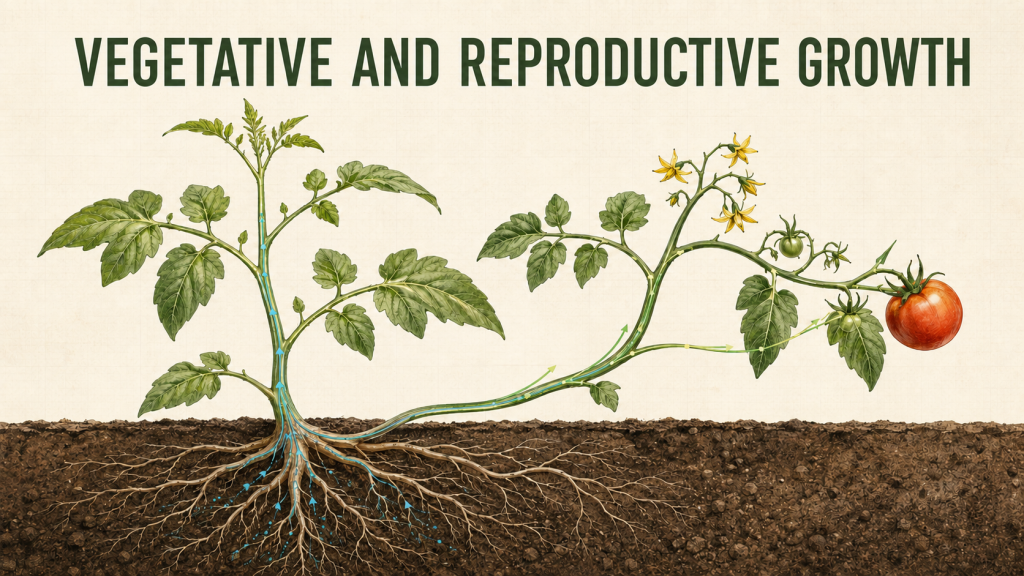
Plant development is characterised by the succession of different physiological stages. Among them, vegetative growth and reproductive growth represent two fundamental phases, each with different objectives, nutritional needs and metabolic processes.
Although both stages form part of the same cycle and may coincide during certain periods, understanding their differences allows practices such as fertilisation, irrigation, pruning or the application of biostimulants to be adjusted more effectively. The aim is to maintain a suitable balance between the formation of vegetative structures and the production of flowers, fruits and seeds.
What is vegetative growth?
Vegetative growth is the phase in which the plant allocates most of its resources to forming and developing roots, stems and leaves. These structures form the basis on which production will later be supported.
During this stage, there is high activity in the apical and lateral meristems, in other words, in the tissues where cell division takes place. The new cells generated subsequently increase in size and specialise to form the different vegetative organs.
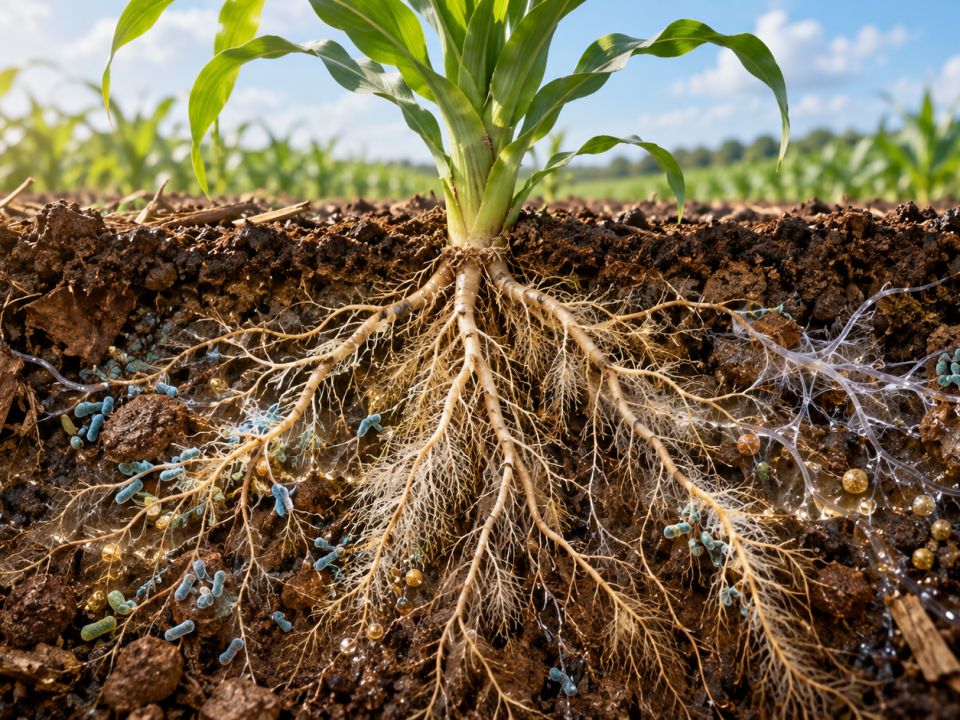
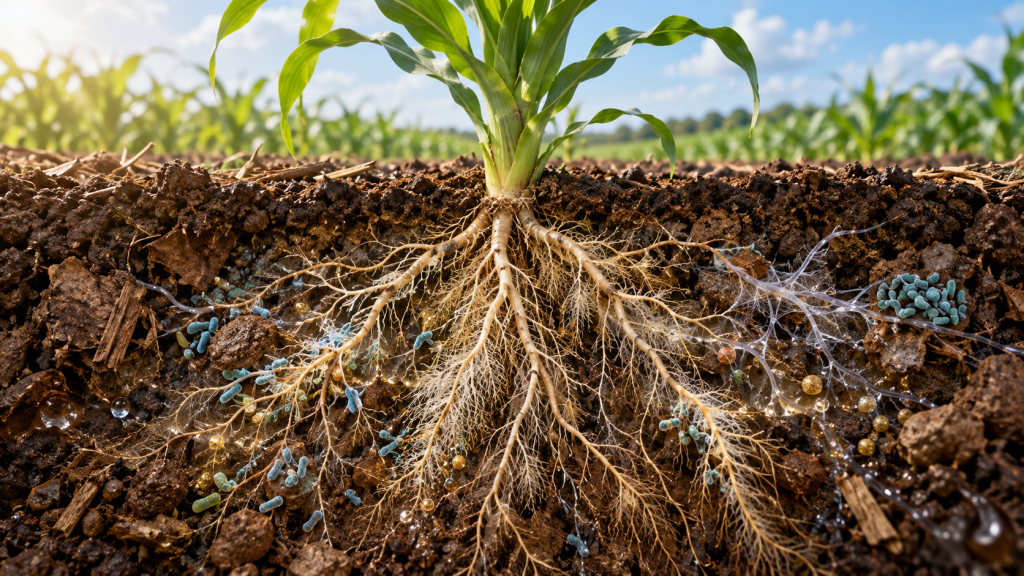
Leaf expansion is especially important, as it increases the surface area available to capture solar radiation and carry out photosynthesis. At the same time, root development allows the plant to explore a larger volume of soil and improve the absorption of water and nutrients.
Vegetative growth is therefore characterised by:
- Intense cell division and elongation.
- The formation of new shoots, leaves and roots.
- An increase in photosynthetic surface area.
- High nitrogen demand.
- The production of proteins, enzymes, chlorophyll and other structural compounds.
- Hormonal activity mainly dominated by auxins, cytokinins and gibberellins.
In this phase, nitrogen plays a particularly important role because it forms part of amino acids, proteins, nucleic acids and chlorophyll. However, an excessive supply can lead to disproportionate vegetative development, with softer tissues, long internodes and greater competition between shoots and future reproductive organs.
What is reproductive growth?
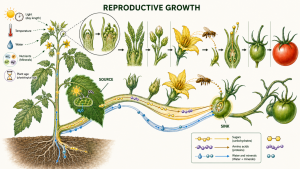
Reproductive growth begins when the plant starts forming flowers and progressively directs its metabolism towards the production of fruits and seeds.
The first major change occurs with floral induction, when certain internal and environmental signals cause a meristem to stop generating vegetative structures and begin forming floral organs. Day length, temperature, water status, nutrient availability and the plant’s own age may all participate in this transition.
From that point onwards, processes such as floral differentiation, flowering, pollination, fertilisation, fruit set and fruit development take place. Each of them requires very precise coordination between nutritional status, hormonal balance and the availability of photoassimilates.
During reproductive growth, young fruits become important demand organs. This means that they attract sugars, amino acids, minerals and other compounds produced or absorbed by the plant. In plant physiology, these organs are called “sinks”, while adult leaves, capable of producing and exporting carbohydrates, mainly act as “sources”.
The greater the plant’s photosynthetic capacity and the more efficient the transport of these compounds, the greater the chances of maintaining flowering, favouring fruit set and correctly completing fruit filling and ripening.
A change in resource distribution
The main difference between the two phases does not lie only in the organs that are formed, but in the way the plant distributes its resources.
During vegetative growth, a high proportion of photoassimilates is directed towards roots, young leaves and growing tips. When the reproductive phase begins, flowers, fruits and seeds start to compete with shoots for these same resources.
This change can be represented through the source-sink relationship:
- Mature leaves function as carbohydrate sources.
- Young shoots, growing roots, flowers and fruits act as sinks.
- The intensity of each sink determines its capacity to attract nutrients and photoassimilates.
- When demand exceeds the plant’s capacity to generate resources, flower abortion, fruit drop or insufficient calibre may occur.
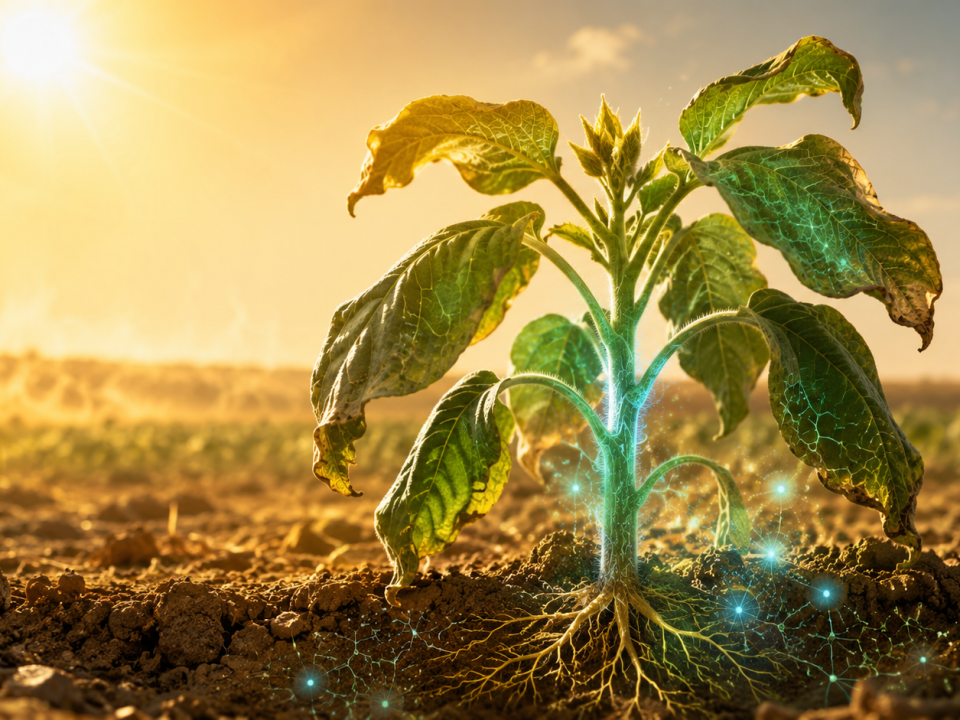
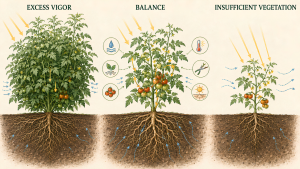
For this reason, a plant with a lot of foliage is not always a more productive plant. If vegetative growth is too vigorous, shoots can compete intensely with flowers and fruits. Conversely, a plant with insufficient leaf surface area will have a limited capacity to produce the carbohydrates needed to sustain the crop.
Hormonal differences
Plant hormones actively participate in the regulation of both phases.
Auxins are involved in apical dominance, cell growth and root formation. Cytokinins favour cell division and shoot development, while gibberellins stimulate stem elongation and participate in different processes related to flowering and fruit growth.
During the reproductive phase, the balance between auxins, gibberellins, cytokinins, abscisic acid and ethylene becomes especially important. These signals regulate processes such as fruit set, initial cell division in the fruit, fruit growth, ripening and senescence.
It is not, therefore, that some hormones act exclusively during vegetative growth and others during reproductive growth. The difference lies in their relative concentrations, tissue sensitivity and the interaction between the different signals.
Nutritional needs in each phase
The plant’s needs also evolve throughout the cycle.
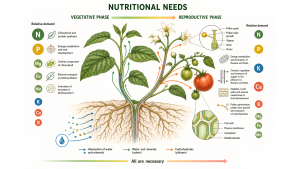
In vegetative growth, nitrogen is usually one of the most demanded elements due to its relationship with protein and chlorophyll synthesis. Phosphorus contributes to energy metabolism and root development, while other nutrients, such as magnesium, iron and manganese, participate directly in photosynthetic activity.
During reproductive growth, elements such as phosphorus, potassium, calcium and boron become especially relevant. Potassium participates in osmotic regulation and sugar transport; calcium contributes to the stability of cell walls and membranes; and boron is involved in pollen germination, pollen tube growth and carbohydrate transport.
This does not mean that there is an absolute separation between “vegetative” and “reproductive” nutrients. All of them remain necessary, but the intensity of demand, the destination organ and the consequences of a deficiency or excess change.
The balance between vegetation and production
From an agronomic point of view, the objective should not be to completely stop vegetative growth when flowering appears. The plant needs to maintain functional leaves and active roots to sustain reproductive development.
The key is to achieve balance. Excessive vigour can reduce light penetration inside the plant, worsen aeration, delay ripening and increase competition for photoassimilates. At the opposite extreme, insufficient vegetation can limit photosynthesis, expose fruits to excessive radiation and reduce their size or quality.
Factors such as irrigation, nitrogen availability, fruit load, temperature, pruning and stress conditions directly influence this balance. Therefore, management must be adapted to the crop, its phenological stage and the environmental conditions of each campaign.
Vegetative growth allows the plant to build its structure and photosynthetic capacity, while reproductive growth directs that capacity towards the formation of flowers, fruits and seeds. Both processes are connected and depend on proper coordination between cell division, hormonal activity, nutrition, photosynthesis and photoassimilate transport.
Understanding these differences helps to better interpret crop behaviour and make more precise agronomic decisions. Balanced production does not depend on maximising a single phase, but on ensuring that the plant develops sufficient vegetative structure while, at the same time, effectively directing its resources towards the reproductive organs.
Productos relacionados